
Unpacking a Coaching Journey
Written by Gary Blumberg
April 21, 2025 (Revised November 21, 2025)
Being coached by the Coach
Most first conversations rise and fall through small talk until they reach the real opener: “So, what do you do?”
When you answer, “I’m a coach,” another question usually isn’t far behind.
And it’s in that follow-up where things get more layered — not complicated, but thoughtful — especially because I always try to be intentional with words, dialogue, and anything I write.
And how I answer often depends on context: who I’m speaking with, what they’re curious about, and where the conversation naturally wants to go.
Don’t worry — the basic answer follows. I’ve learned I need one, and I use it often.
It goes something like this:
“I’m a coach who works with individuals, organisations, and teams to strengthen how they think, perform, and lead — whether they’re in corporate settings, working in groups, competing in sport, or navigating the goals, challenges, and growth that move them from good to great in any walk of life.”
What I’ve written in Part I and Part II is, in many ways, the fuller version of that answer — for anyone who wants to go beyond the surface.
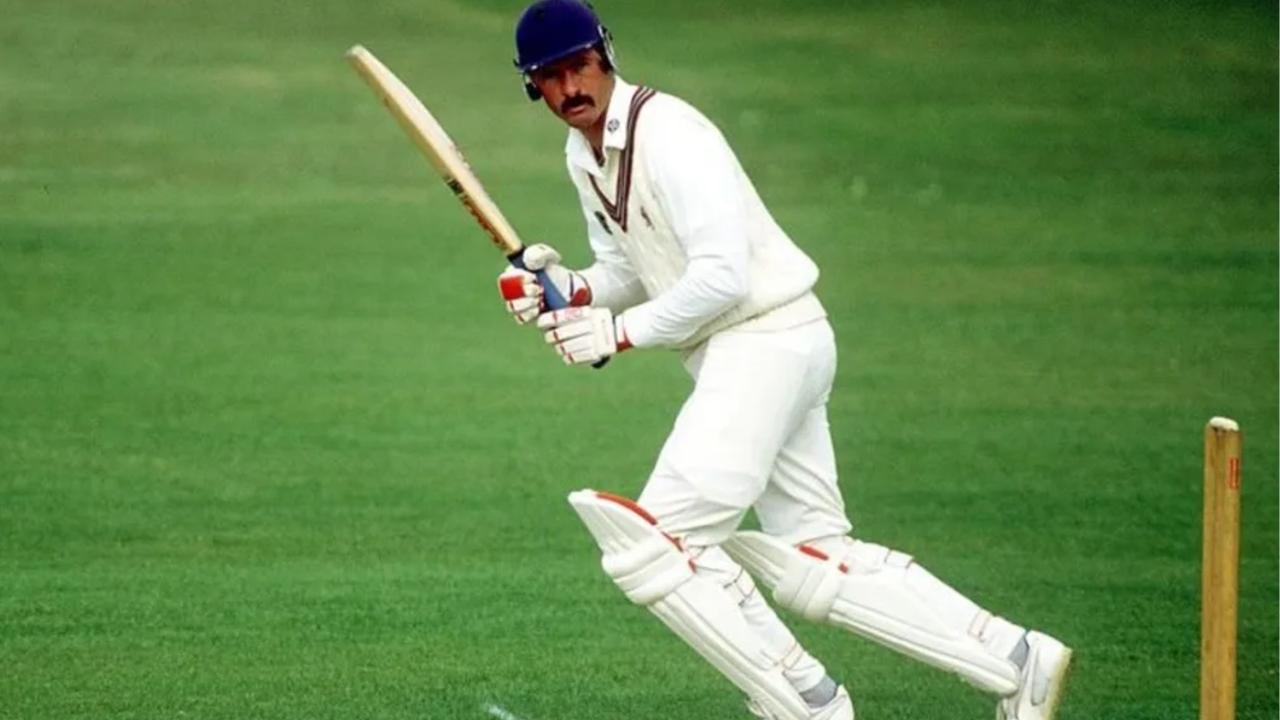
Growing up in Johannesburg, South Africa I was fortunate enough to have a sports coach who was regarded as one of the best around.
Jimmy Cook was not only a world class international cricketer; but he was a professional soccer player as well.
In South Africa at the time, even the professional athletes had a day job. As he played at the top level in two sporting codes and studied to become a qualified teacher; Jimmy was also a part-time sports coach at our primary school, Fairways.
As a coach he was both intuitive and methodical: developing his own skillset as a player under the tutelage and mentorship of top coaches and fellow players; while simultaneously progressing his own teaching skills, both formally and informally.
He could explain a point or concept and show you how to do it.
The 1970’s were a confusing and turbulent time in South Africa. Under the apartheid regime the school system and sports, amongst everything else, were segregated along racial lines.
The cruelty and injustice of that version of South Africa is beyond the scope of this article, but apartheid insinuated itself, whether directly or indirectly, into every aspect of society and life, including the sports we played or watched, and who we interacted with.
There are always exceptions to an oversimplified generalisation such as the one that follows, but in those days, cricket was played and followed predominantly by white people; while professional soccer, although far more integrated given its multi-cultural appeal to ethnic minorities and other expatriates, attracted a mainly black following.
Thus, despite the fact that it was rare for an athlete to appeal to fans across the racial divides that existed, because of his dual sporting prowess, Jimmy Cook did just that.
Regardless of your skin colour or background, if you followed South African sports in that era, particularly in the old Transvaal province, you knew of Jimmy Cook.
And, for a pupil, teacher or parent at Fairways Primary School; he was your sports hero.
He was, most certainly, my sporting hero.
Coaching lessons beyond sports
Heroic status of an icon in any field, is always in the eye of the beholder.
Once I left Fairways and started High School, it wasn’t difficult to poke fun at me: my adoration of Jimmy Cook was an easy target. Whether I responded with grace, humour, annoyance or anger; I was never, ever impartial.
Make no mistake, I was comfortable enough to declare that bias at any door which I happened to enter. It’s what true fans do.
Loyalty ran, and still runs, very deep. Thankfully Jimmy was that good player at both sports, that he rarely ever let his fans down. If talent, athleticism, and work ethic weren’t enough, Jimmy’s integrity on the sports field was legendary as well.
In cricket, one of its numerous quirks, if you’re not familiar, is the fact that the batsman (batter) sometimes gets to decide their own fate before the umpire does, by electing to ‘walk’. That is, to declare themself out.
In baseball, it’s akin to a baserunner who has been called safe by the umpire saying: “Sorry ump, I never got to home base in time. I felt him tag me. I’m out. Chalk off that run please!”
He was among that rare breed of top-level batters who ‘walked’. Banal pun notwithstanding, you could say, he walked the talk.
Jimmy Cook’s impact was a coaching and playing legacy.
If he taught you how to play, there is no doubt some of those fundamentals, whether technical or tactical, followed you. If you paid attention, there were lessons, both active and subliminal, about right and wrong, and about how to conduct yourself as an athlete and teammate.
Following High School, I became a student (Arts English-Major and then Law School) at Wits University in Johannesburg.
As a competitive student-athlete myself looking to pay my way and supplement my scholarship, serendipity led me to a part-time job crafted in heaven: Jimmy Cook’s Assistant Coach at Fairways.
‘The Teacher-Coach’
The legendary NFL coach and broadcaster, the late, great John Madden was renowned for his ability to teach.
He had a gift for breaking down complex principles into smaller and easier to understand components and then convey those ideas to a wide audience in a palatable and entertaining way.
These attributes were a hallmark of his success in both careers.

I remember a Monday Night Football broadcast in which he was lauding the performance of a team’s offensive line, saying something to the effect that ‘it’s not surprising, because their O-line coach is a teacher, and teachers make the best O-line coaches!’
Some of the coaches we had were very good at teaching a technique. Some were better explaining a tactical concept. Some could motivate you. For some, their superpower was that they were well-organised (an oft-under-rated coaching skill!).
However, very few put it all together; and some couldn’t do any of it very well, at all.
It was the days before the coaching staff or team – usually one assistant at best at school level. If you happened to get a coach for a season who wasn’t adept at any of these things, you could almost write-off that season – we ended up having to coach ourselves!
When I reflect now in terms of coaching influences, I was most likely beginning the process that occurs in any learning arc: take away as much ‘what to do’ as ‘what not to do.’
Under Jimmy Cook’s tutelage it was a different story. He was a coach who taught. He was also a teacher who could coach.
And he taught me how to be a coach.
Thus, that part-time job came with an outstanding benefits package: getting a coaching education as the master coach’s apprentice.
Whether he knew it or not, I was going to take those fundamentals into the coaching roles that came my way.
I began to understand why making sure technique was so essential, and how when you married it to ability, there was potential for something graceful and poetic.
I started to appreciate when to praise, and when to admonish, but to always have a purpose that was framed in the positive.
And I was learning that even if talent, technique, flair, physicality, and even commitment, were present; if you couldn’t find the right cognitive process or temperament for the specific moment, and consistently; you might just be a talented player who never realised your full potential.

Mentors mentoring
As for realising potential, as a soccer player I had begun to do some of that, representing the University as I pushed to be the best player I could be. With good coaches in a competitive and challenging environment, I was traveling in the right direction.
Graduation meant full-time employment and a transition to the South African legal system’s apprenticeship system for aspiring lawyers. In short, as a law school graduate you joined a firm as an ‘articled clerk’ where, depending on the size of the law firm, you were assigned a mentor, called a ‘principal’, or group of mentors/principals, over a 2-year minimum period.
The underlying rationale was that this mentorship would bridge the gap between the academic and the practical, before you could write the Board exams and qualify to be admitted to practice.
The process, format and experience of articles for each candidate was different, depending on the area of law practice and the type of firm. But the experience and quality of this part of your education was mainly dependent on your principal. And that was dictated partly by the cult of their personality but, more significantly, by how skilled and capable they were at mentoring.
The result was that life for me then, involved being on the lowest rung of the law firm’s professional ladder, playing semi-professional soccer in the evenings and weekends; and enjoying whatever social life my mates and I could squeeze out of the rest of the time.
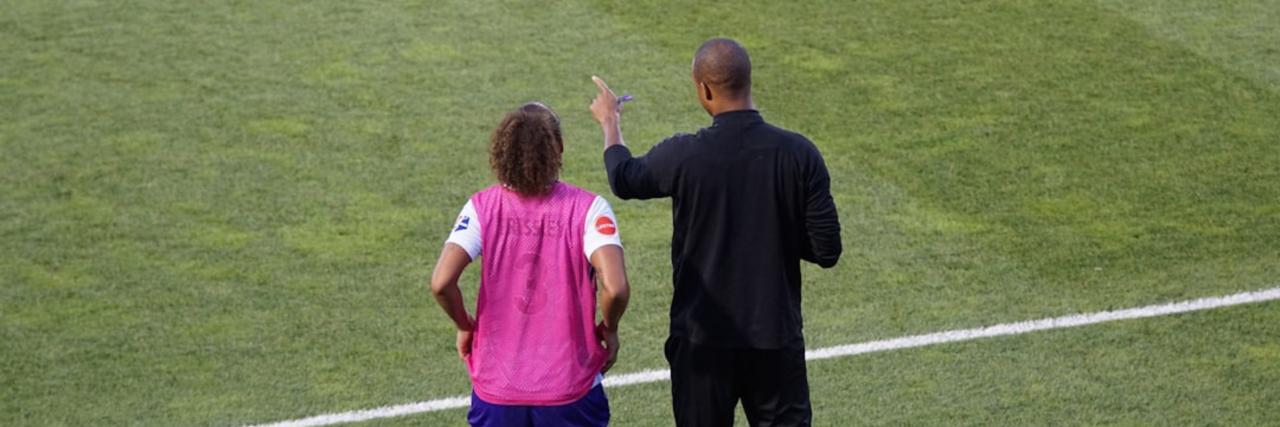
My professional career mentorship was the responsibility of my law firm principal during (very extended) work hours. After work, training me as soccer player was the remit of my head coach.
Although different roles, both had an almost militaristic mandate to demand that you move with supreme haste, often without the courtesy of a “please”:
At the office it was,“Blumberg, I need you to run to the courthouse to submit that Discovery affidavit. Quickly!”
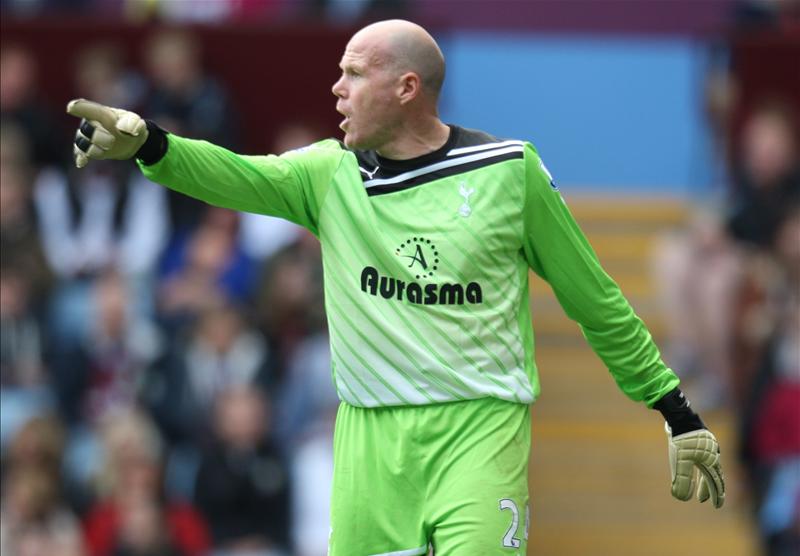
And on the pitch it was,“quickly Blumberg! Up! Ready for next save. Come on!”
Whether teachers, coaches or mentors; the overarching ‘lesson of lessons’ was that lessons could come from anyone anywhere, and at any time.
Regardless of whether I was being coached or mentored, one of those fundamental takeaways that became a non-negotiable, was that I was the one accountable for my own performance. No one else.
Professional coaches’ environment
Whether consciously or not, my own coaching philosophy and frameworks had been enabled through the aggregation of these eclectic mix of styles and approaches, and over many years.
Simultaneously drawing my own best practices from this considerable well, I was also taking some agency in finding a pathway to create my own coaching and mentorship essentials.
Following my articles and qualification as a practicing lawyer, I moved to the UK in the early 90’s to further my career and life. It meant new mentors and different perspectives; and, by continuing to play soccer competitively, it meant exposure to new coaches as well.
As a sports lawyer primarily representing professional soccer players in England and Europe, it also meant coming across some of the greatest coaches in the world and getting some insight into their methods and approaches.
And, as players began to confide in me more and more, I was able to get a sense, in real time, of how some of those coaches were applying mental performance coaching.
Having always been fascinated by peak performance, my learning in this field was being enhanced by reading anything I could get my hands on.
When you looked behind the curtain, you understood that the skillset of the very best coaches and managers involved the ability to inspire and motivate, to coach tactically and technically, and to relate to different individual personalities, in a collective way.
But they also needed to integrate those skills with the ability to navigate the corporate halls, to spot talent, and then be deft enough to handle and massage the media. I could go on.
Perhaps, most important of all, a pre-requisite was a superpower skill: the meta-cognitive ability to gel it all together.
The coach, in the UK particularly, was the ‘boss.’ He was appointed officially as the ‘manager,’ and in and around the game more colloquially referred to as the ‘gaffer’.
Regardless of title or moniker, win or lose – the ultimate responsibility fell on the shoulders of the boss.
It was a new lens through which to view coaching and performance, and the cutthroat nature of it was on a higher and more intense level than I had ever seen.
Roy Hodgson and the Coach vs. CEO
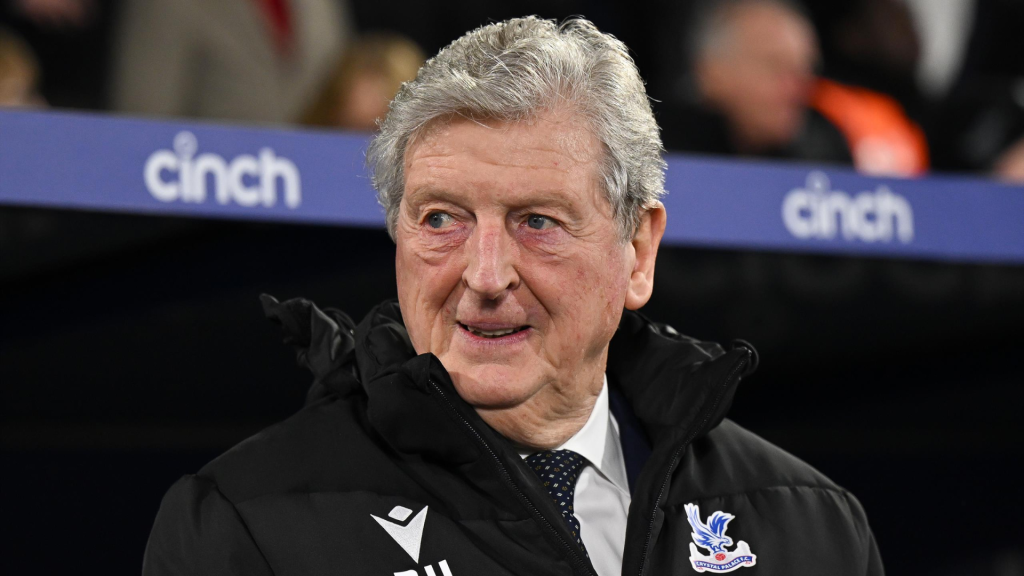
I remember a conversation with Roy Hodgson, the former Head Coach of England, Switzerland, Liverpool and Inter Milan (among other top-level clubs).
We were discussing the difference between a CEO of a major company and the Head Coach of a major soccer team. Apropos the cadence and public intensity of the respective roles, he argued that the club soccer head coach has a more challenging position. In his view, when you have a game at least every week, you are bound to lose some, and there is always someone who wants you fired.
Add to that, he stressed, was the inescapable impossibility of the intense media scrutiny.
It certainly resonated for me. Just a few years earlier I had a peripheral involvement in a groundbreaking fly-on-the-wall documentary, appropriately entitled “An Impossible Job” about the then-England Soccer Head Coach, Graham Taylor. While he may not have helped himself in many ways, Taylor’s experience for everyone to witness showed you it wasn’t just another ‘difficult’ role
The CEO of a public company, Roy suggested, is only truly required to face the music if the share drops significantly, or when delivering a board or shareholders report.
Furthermore, he lamented, most people usually understand the cyclical nature of business or a fluctuating share price responding to market factors. Sports fans, generally, do not.
It’s a debatable argument – they are both challenging roles – but I understood what he was saying: in the fishbowl of professional sports, almost everyone is second-guessing the coach’s decisions, in a very visceral, noticeable, and quantifiable way, and they let you know when they are unhappy.
That unique conversation had also served for me to connect the idea about viewing the head of a company, and anyone who leads any group or team, through the prism or construct of the Head Sports Coach.
Ironically, years later, Roy would go on to take that impossible job. Even though his record of 33 wins, 15 draws and 8 losses in 56 games is respectable; not meeting the expectations of winning a major trophy, coupled with an ignominious loss to Iceland, meant that he was almost obliged to resign.

Compiling a Rule Book
Whether captaining my club team, driving and leading my team in our business, or representing and advising clients, I developed a ‘way of being’. An approach.
Consciously or not, I had built my own rulebook, and it’s what you ‘got’ from me if I was coaching, mentoring, advising or consulting.
One of the mental pictures in my constantly-a-work-in-progress ‘book’ was that if you said ‘coach’, my mind immediately went to sports coach.
By now, I was fully bought into the idea that the head coach, manager, or ‘gaffer’; was master of the relevant team domain they were in, making an impact across everything from style of play, technical proficiency, physical output and player and team culture. It all mattered.
As a fan and follower of most sports, you could say I was something of a student.
In trying to understand basketball for example, a sport I never played, I would not only read about Pat Riley, Phil Jackson, Bobby Knight, and Mike Krzyzewski amongst others; but also what they wrote and had to say about teamwork, leadership, coaching, and how to play the game.
When it came to football, I wanted to understand more about what set people like Vince Lombardi, Bill Walsh, Bill Parcells, and of course, John Madden, apart. What drove them and what had they done, season after season to keep their players and teams at a high level?
Having been exposed to some of the leading soccer coaches and players who had success in my time living in England; it was clear to me that people like Arsene Wenger, Alex Ferguson, George Graham and, of course, Roy Hodgson; – some of the most successful coaches/managers of that era – had so much in common with their American sports coach counterparts. There was a universality to the criteria for success.
And I was now forming an essential rule for my book: you had to be able to put all those ingredients together to manage the whole, but while doing so you needed a laser-like attention to detail.
But I was also nurturing a growing perspective: at the highest level the margins were vital in determining wins or losses.
And luck was one of those margins. You had to practice for it, and you never knew when it was coming, but you also helped make it.
My coach’s rule book was developing into something of a playbook, and although it was heavily sports coach-oriented, it was grounded in principles that how you conducted yourself off the field would determine how you performed on it, and vice versa.
As I started another major transition in my life, I would soon get the chance to put some of that playbook to the test.
Click Here👇 to read
To receive this and our other Coaching Psychology and Positive Psychology blogs and publications, including the Rory’s Masters Pieces Series please click on the link 👇 and complete your details:
For Downloadable & Printable Copies of all our Blogs Click on the Link Below👇(*will open in a new window)