
By Gary Blumberg
July 17, 2026
What an Unremarkable Minute Near the Corner Flag Reveals About Messi's Genius
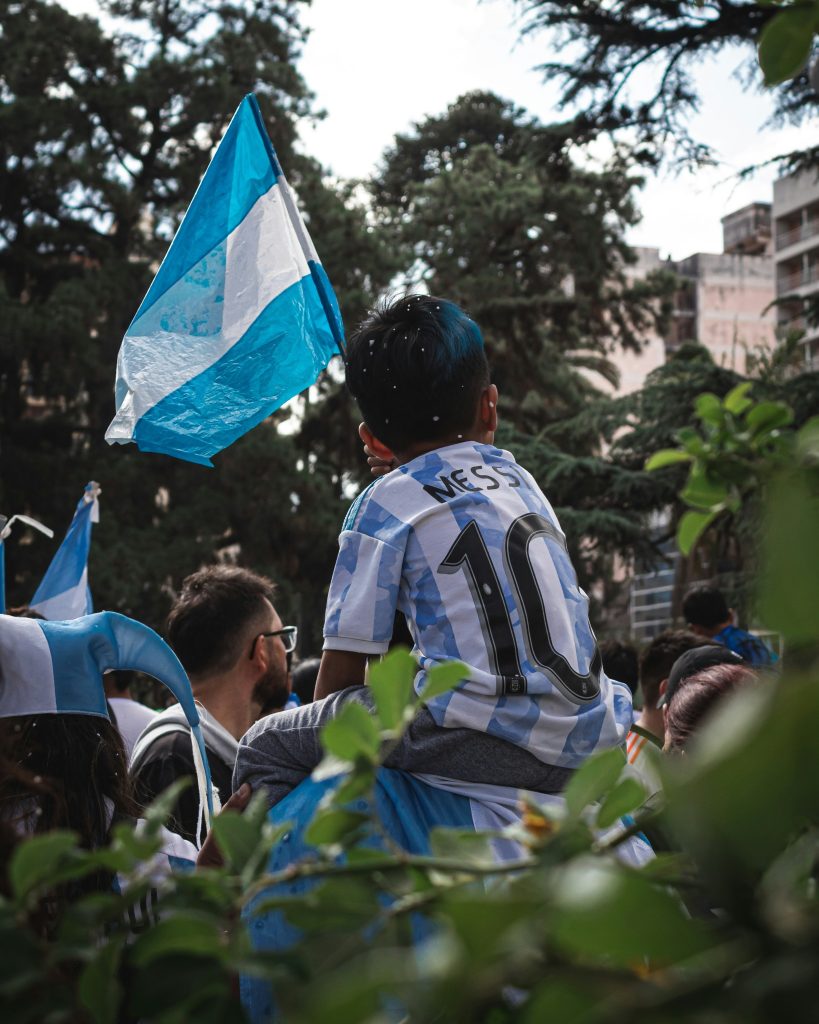
The partisan lens through which you view sporting results often inform your takeaway.
The sometimes scrappy, but always compelling, World Cup Semi Final between England and Argentina, two historic and bitter rivals, brought that into focus.
For England it’s about their coach Thomas Tuchel’s substitution choices and their apparent reluctance — and possibly inability — to keep the ball once they’d gone ahead. How they let slip a lead when they were so close to their second ever World Cup Final. A missed opportunity.
For Argentina, its about the affirmation of Lionel Messi’s genius. But its also about their coach, Lionel Scaloni’s substitutions that changed the game. A chance to win back-to-back World Cups.
For neutrals, it’s about both and more.
This was the the third knockout game in a row that Argentina came from behind to win. Although remarkable at this level, there has been a feeling of inevitability about it. And as he has inspired his team at the age of 39, Messi has made the extraordinary seem ordinary.
The game had been snatched from them so late, it made an England comeback – especially as they had packed their team with defenders hoping to see the game out – highly unlikely.
I was hoping they could get the ball forward and create one more chance, convert it and take the game into extra time. But as I watched the seconds tick away, and as a counter to my hope, that it would probably only delay the inevitable, I noticed something else in a seemingly minor moment.
It’s something that, described plainly, sounds almost too ordinary to write a blog about — and yet says as much about the scale of Messi’s genius as either assist for the goals in that game did. Or any of the other remarkable things he has done this tournament.
With the tenacity and energy of a player half his age, and the soccer IQ that exemplifies the GOAT, Messi engineered a press that forced England to turn the ball over. Back in possession, Argentina had a chance to eat up some more precious seconds inside England’s half.
What happened next is Coaching 101: with a lead to protect and the clock running down, try keep the ball and they cant score.
One of those ways is to take the ball into the opponent’s corner and shield it. Its as far from your own goal as the pitch allows, it takes longer for them to get it upfield, and your have touchline and goal-line to help protect possession. The losing team’s worst scenario in that moment and game context.
Every coach teaches it. Its good game management for the team that is winning. Its even taught, somewhat cynically, to youth players these days.
Those with a basic tactical understanding of the game watching, expected exactly that.
But Messi’s teammate Nico González, who had already managed to take the ball to the corner, didn’t stay there.
Probably sensing he needed to get the ball to his talisman, he passed it to Messi, who by now was being marked by two England defenders in a small space.
It reminded me of an old adage my first ever soccer coach taught me: “If you’re not sure what to do with the ball, give it to the best player, he’ll figure it out.”
Instantly, Messi recognised exactly where new open space was, away from those two defenders.
However, taking it there wasn’t straightforward. And required instant decision-making and perfect technique.
With an exquisite single touch, he played the ball sideways into that space, and had already set off to collect it ahead of the two defenders who had been drawn towards the spot where he was a few moments earlier.
Effectively, he passed the ball to himself.
And then he did exactly what the coaching manual says: he took it towards the corner flag.
Holding onto it long enough, he drew a challenge that was probably a foul, and although not called, the ball forward from the England player was from so deep and was rushed, the ball ended up back in Argentina’s possession.
And these decisions and moments in the last few minutes don’t actually impact the outcome of games, just ask John Barnes, the former Liverpool and England international.
In 1989, with the English title on the line in the last game of the season against Arsenal at Anfield, Barnes had the ball in a similar position — and instead of taking it into the corner, he tried to beat a man and score. Arsenal won the ball back, worked it forward, and Michael Thomas scored a goal in the final seconds that won his team the championship.
One of the most iconic moments in English soccer history might have had a different outcome.
Unless you go looking, you probably won’t see a replay of what Messi did in that moment, because its definitely not the kind of thing that shows up in highlights packages.
{*its in the 99th minute if you can access a video replay of the full game}
But he was reading exactly where the space was and exactly what the his team needed from him in that moment — and producing it, instantly, under pressure.
This is where I think most talk about genius gets it backwards. We go looking for greatness in the spectacular — the outrageous dribble, the impossible finish, the assist that shouldn’t exist.
Messi has shown us all of those this tournament.
But real mastery, built over a lifetime of repetition, shows up consistently. Not only in the big moments, but in the ones that might seem ordinary too.
There’s a lesson in that beyond soccer.
We tend to assume mastery will announce itself — that we’ll know it when the moment is big enough, loud enough, obvious enough to deserve it.
More often, it’s quiet. It’s the small decision made correctly under pressure, not because you worked it out in the moment, but because you’d already done the working out, years earlier, in a thousand smaller moments nobody was filming.
And its the lesson that any coach of any skill should impart.
What happened at that corner flag wasn’t skill in the narrow sense. It was decision-making, spatial awareness, and technique, compressed into a single, almost invisible action — done so instinctively it barely registered as a decision at all.
Psychologists who study skill acquisition have a name for that shift: moving from conscious competence to unconscious competence — the point where a skill is so embedded you stop reasoning your way through it and simply do it, correctly, under pressure, with no time to spare for deliberation.
True genius, in the end, may be recognised in the spectacular. But is grounded in the simple things.
Messi, by keeping possession in that moment.
Looking like its simple and easy. Like it’s straightforward.
Thats mastery.